

10 mart. Fuji X-E2 and Chefchaouen – My First Fujifilm Trip in Morocco
If you’ve read my articles on this site, then you already know that this trip was the moment when everything changed for me.
This was my first real trip with a Fujifilm camera.
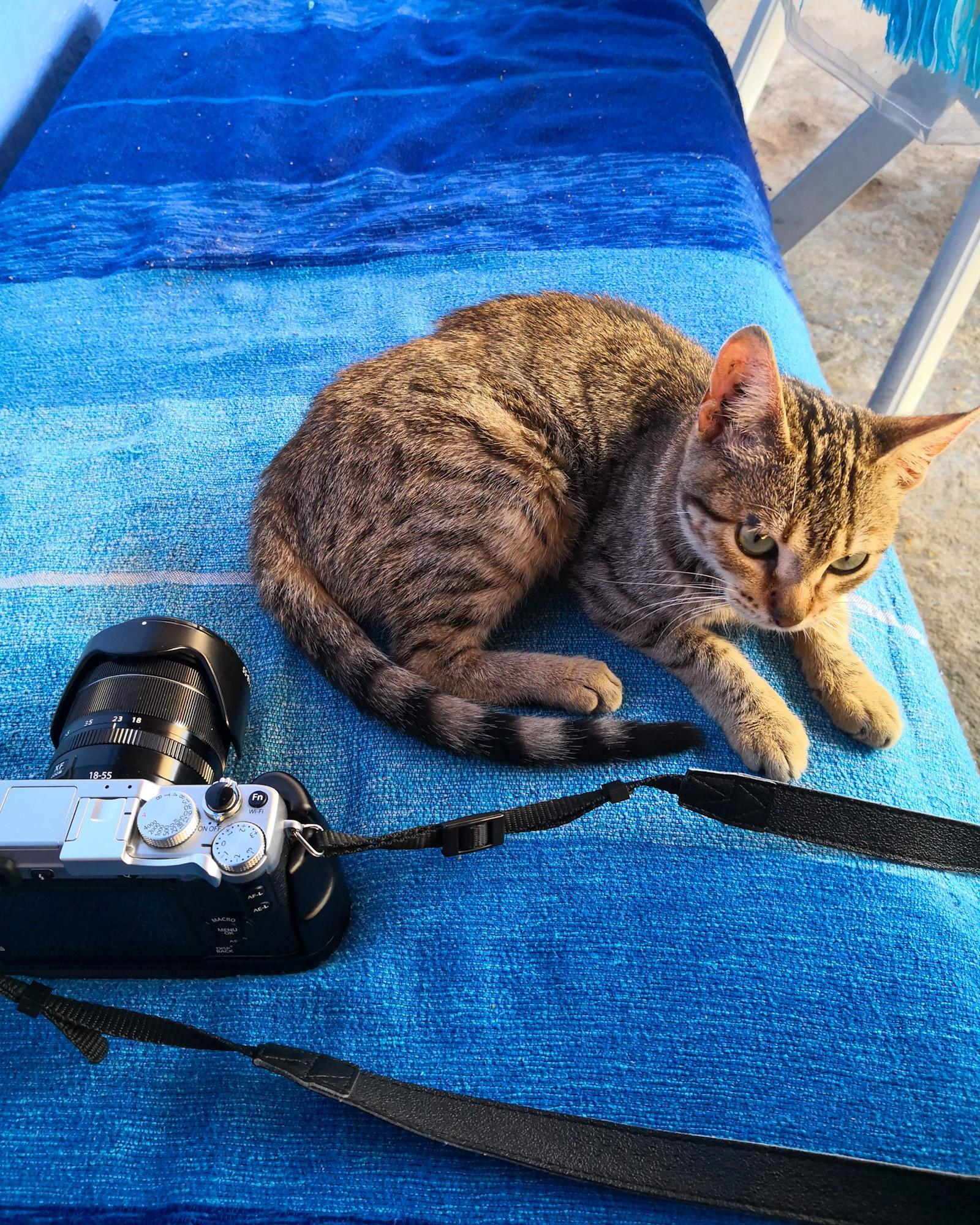
The old Fuji X-E2.
I still remember how I kept staring at that camera and at the old 18-55 kit lens I had with it. It felt so different from my Sony A6300.
The lens was so worn that every time I pointed the camera downward, it would slide from 18mm to 55mm in a second. At first, I got a few soft and strange shots before realizing what was happening.
I used Sony gear on my previous trips, but this time I had a completely new challenge.
I didn’t know the camera well.
I didn’t know which aperture worked best for the lens.
I didn’t fully understand how the autofocus behaved.
And yet, on that very first day in Chefchaouen, I discovered something important: how easy it was to operate a Fuji camera.
And how fun it could be.
A Different Kind of Destination
While this wasn’t my first time in Africa, Morocco felt completely different from Egypt.
And Chefchaouen is something special even within Morocco itself.
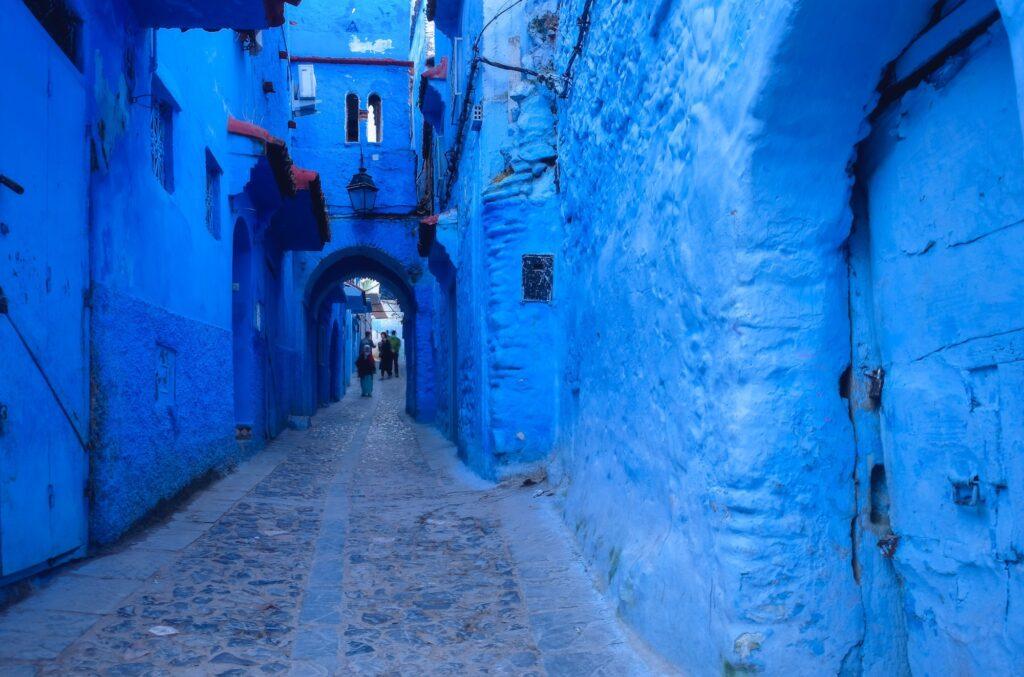
This is one of those places where you simply walk and look for photographs.
There are no huge monuments forcing you to rush from one sight to another.
No pressure. No endless checklist.
You have time.
You can walk slowly, study the streets, pick your composition and shoot.
Yes, the streets become more crowded after ten or eleven in the morning, but with a bit of patience you can still capture beautiful images.
That is one of the best things about Chefchaouen.
It rewards wandering.
My First Surprise with Fujifilm
Because it was my first real trip with Fuji, I knew almost nothing about film simulations or building my own presets.
In my mind, I relied heavily on RAW files.
But once I returned to Bucharest, I was in for a surprise.
I really enjoyed the JPEGs.
And that was a first for me.
With my Sony A6300 I could get very good RAW files, but I was never truly happy with the JPEGs. I couldn’t simply transfer them to my phone, spend two or three minutes in Lightroom Mobile, and share them online.
With Fuji, that changed immediately.
From that very first trip, I realized Fujifilm gave me something I hadn’t really enjoyed before:
JPEG files that already looked alive.
Why Chefchaouen Is So Photogenic
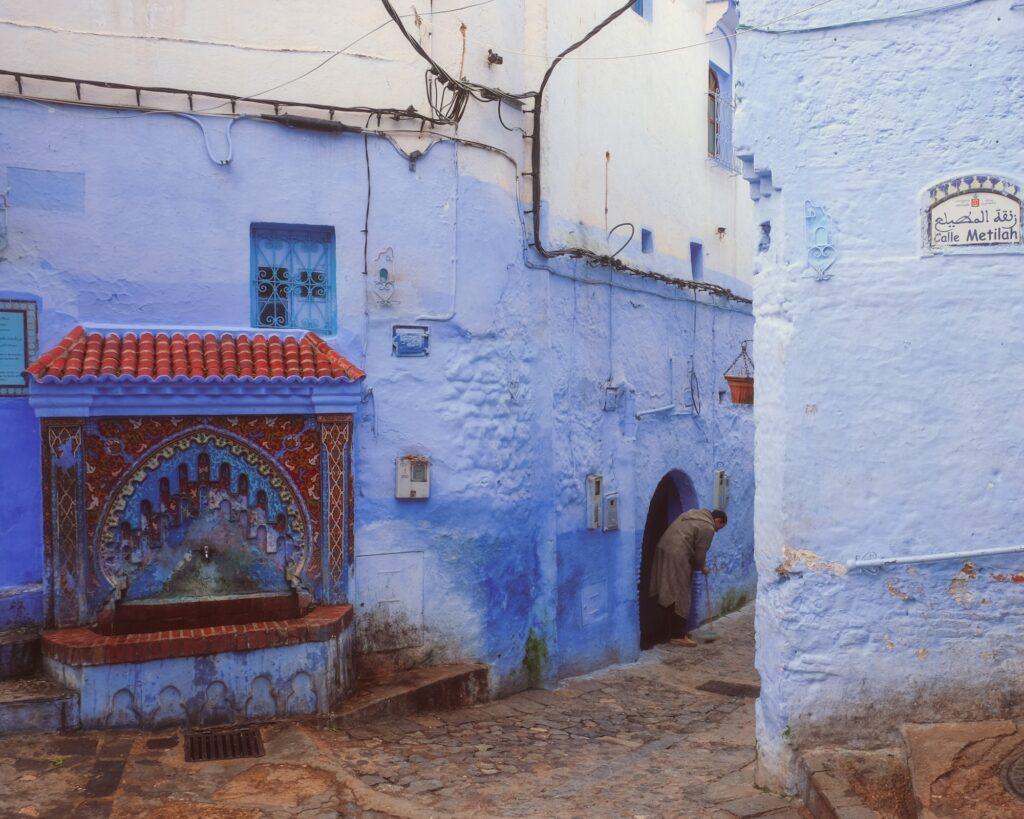
What attracted me to Chefchaouen was not only the famous blue walls, but also the way that blue contrasted with people’s clothing.
Women wearing red or yellow garments next to blue walls created beautiful scenes.
I still remember one moment around noon.
A bus of tourists stopped, and many girls stepped out wearing yellow, blue and pink outfits, rushing toward the blue doors to take pictures.
It was a visual festival.
Because the town is small, you can take your time.
Eat something local. Photograph the food. Watch the locals going about their day.
You may think I’m exaggerating, but in Chefchaouen almost every stairway, doorway or blue wall is a photographic opportunity.
And by the end of the day, when you browse your images, you’ll probably find many that you really enjoy.
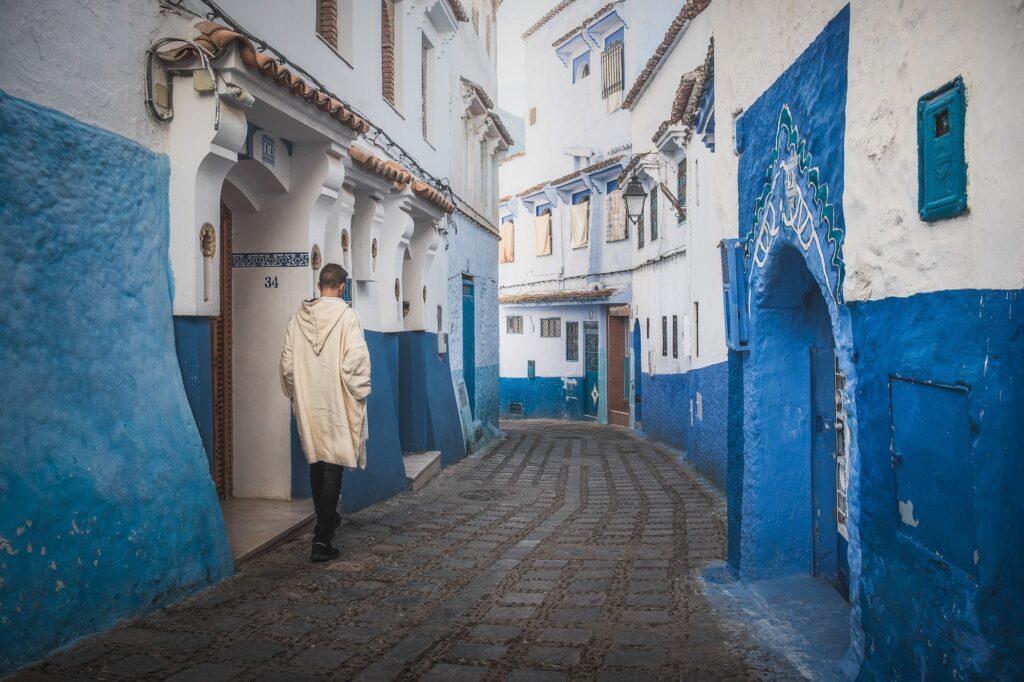
The Best Sunset Spot in Chefchaouen
If you are traveling on your own, as I did, and plan to spend the night in Chefchaouen, there is one thing you should definitely do.
Go up to the Spanish Mosque on the hill opposite the Blue City and watch the sunset from there.
It offers one of the best views over Chefchaouen.
If you decide to sleep in the city, I strongly recommend booking a riad inside the Blue City itself and leaving your car at one of the paid parking lots below the entrance.
That way you can fully experience the city on foot, which is exactly how it should be explored.
The Best Lenses for Chefchaouen
Looking back, if I were to return to Chefchaouen, I would probably pack only prime lenses.
A 23mm and a 35mm would be more than enough.
That’s basically what I used most of the time anyway.
The only moments where I felt I needed anything different were the wider views from the Spanish Mosque.
Otherwise, the city feels perfect for simple focal lengths and a slower way of seeing.
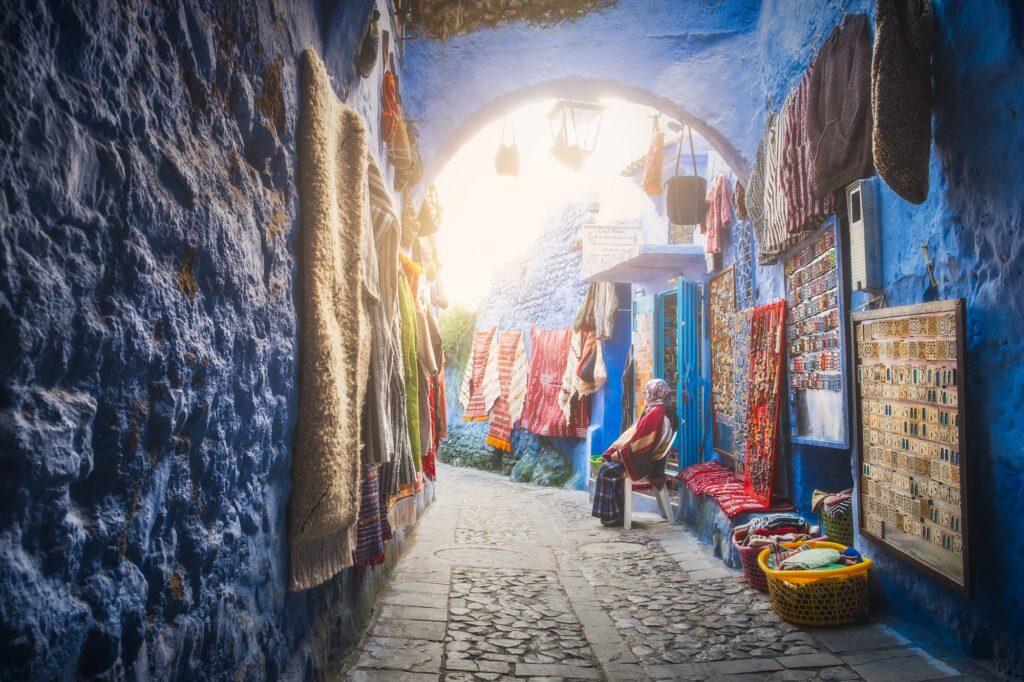
From Chefchaouen to Rabat
After Chefchaouen, I drove to Rabat, where I stayed in one of the best accommodations I’ve ever had on a trip.
It was a beautiful riad with a huge room, great breakfast and a rooftop terrace where I could relax after long days of walking.
Just perfect.
Rabat, however, feels very different from Chefchaouen.
If you plan to visit, I recommend booking a place close to the old city walls and near the old Medina.
Unlike Chefchaouen, Rabat has more defined landmarks that are worth visiting:
• Hassan Tower
• Kasbah of the Udayas
• Chellah
And as an extra bonus, Rabat sits next to the Atlantic Ocean.
So if you enjoy coastal photography, lighthouses, beaches or seascapes, the city can offer some very interesting opportunities.
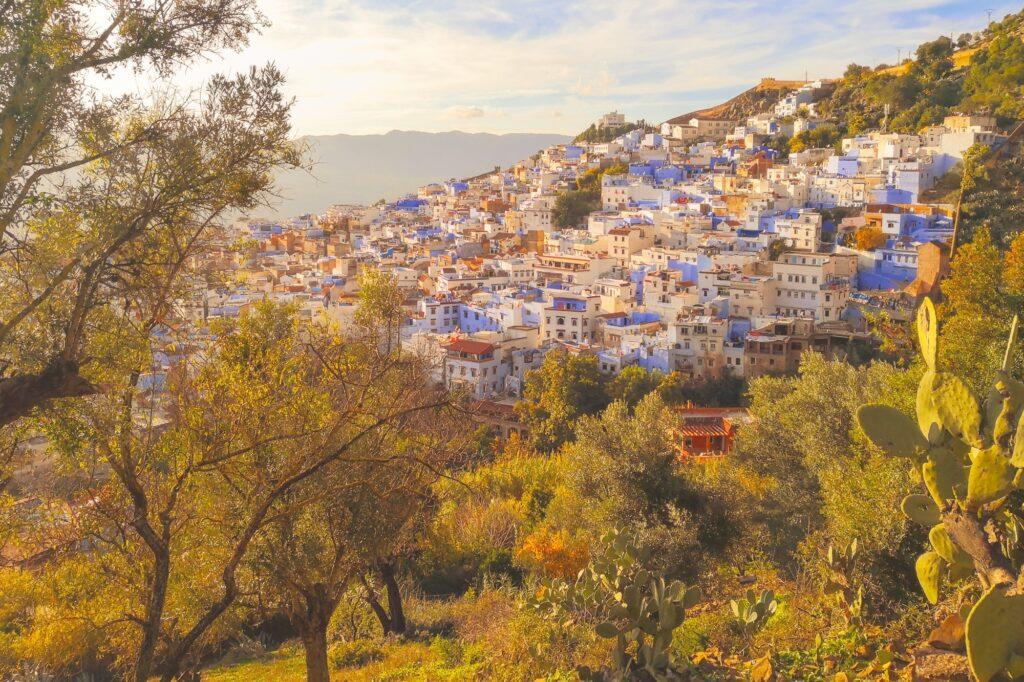
Chefchaouen vs the Blue of Rabat
Some people say that inside the Kasbah of the Udayas there is a small blue area and that you don’t really need to go all the way to Chefchaouen to experience the “Moroccan blue.”
I strongly disagree.
Yes, the blue area in the Kasbah is beautiful.
But it feels very different.
The blue in Chefchaouen is much stronger, richer and more visually powerful.
The blue of the Kasbah reminds me more of the blue tones you see in Greek houses.
Chefchaouen, on the other hand, feels much more intense and unique.
If you have the chance, go there.
Why Morocco Is One of the Most Photogenic Countries
All in all, I truly believe Morocco offers some of the best photographic opportunities I have encountered.
It has:
• the Atlantic Ocean
• high mountains
• old medinas
• fishing towns
• striking architecture
• the desert
Few places offer such a rich mix of visual possibilities.
And after traveling to many different places, I can confidently say that Morocco is one of the most photogenic countries I have visited.
It is a festival of color.
Dark skin tones.
Bright clothing.
Painted cities.
Strong contrasts.
Everything comes together into a visual mix that stays in your mind for a long time.
For a photographer, it can feel like heaven.
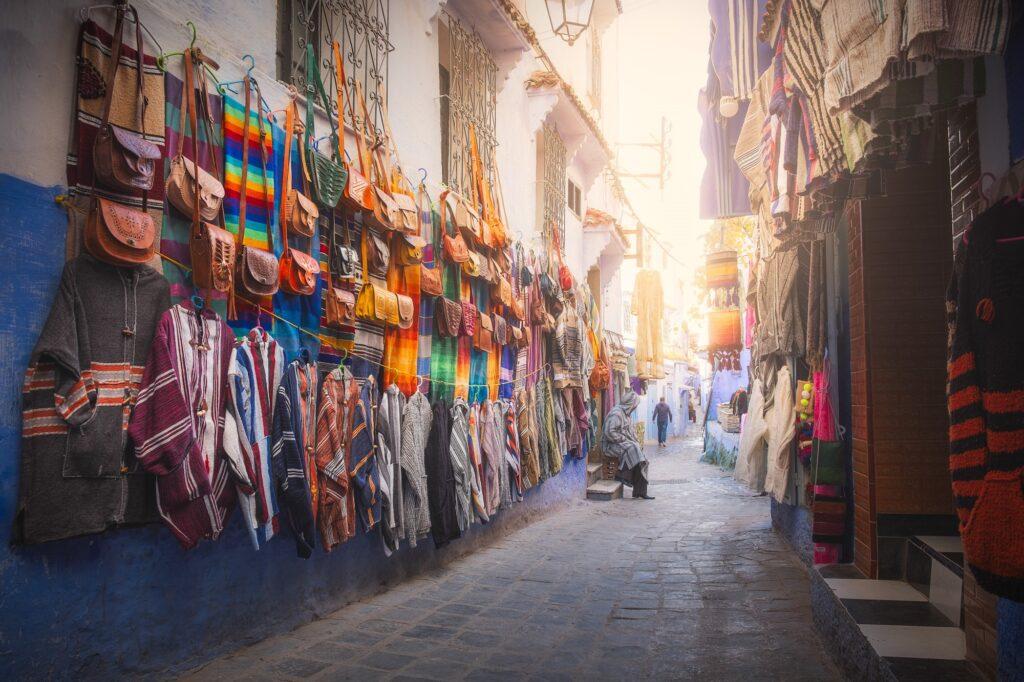
Practical Tips for Traveling in Morocco
Before ending the article, I want to leave a few practical suggestions for anyone planning a trip to Morocco.
1. Learn some French
English helps, but knowing a few phrases in French will make your life easier when asking for directions, ordering food or understanding signs.
2. Learn how to reply to “As-salāmu ʿalaykum”
When greeted with As-salāmu ʿalaykum (“Peace be upon you”), it is respectful to reply:
wa ʿalaykumu s-salām (“And peace be upon you too”)
I did that once in Chefchaouen and the man who greeted me smiled immediately.
Small efforts like this show respect.
3. Fill out the arrival card at the airport
When arriving in Fez, don’t rush straight to passport control. Look for the small arrival/departure cards and fill them in first.
4. Check roaming prices before you travel
Morocco is not part of many cheap European data plans. When I traveled, the costs were huge, so I bought a local SIM card from Orange at the airport.
5. Respect local signs and religious restrictions
If you see signs such as “interdit aux non Musulmans”, do not enter. Keep things simple and respectful.
6. Drink bottled water
Even if some places claim the water is safe, bottled water is the safer choice.
7. Walk as much as possible
Riads are beautiful, but don’t stay inside too much. Explore on foot.
8. Choose riads instead of hotels
They are more beautiful, more personal and usually give a much richer experience than a standard hotel.
9. Never get into a cab before negotiating the price
This simple step can save you a lot of frustration.
Final Thoughts
This was my first trip using Fujifilm gear, and honestly, I never looked back after it.
Chefchaouen gave me more than photographs.
It gave me the first real confirmation that Fuji was a system I truly enjoyed using.
The X-E2 was old.
The kit lens was far from perfect.
I didn’t know the camera properly.
And still, that trip changed something for me.
Maybe that is what good travel photography often does.
It changes not only the way you see a place, but also the way you see photography itself.
And Morocco — especially Chefchaouen — remains one of those places I will never forget.
Hope you enjoy the pictures as much as I do.
*NOTE: in the original article, published some time ago, I used only jpegs but for this piece I selected a handful of raw files and edited them. It is so refreshing to see how well a camera that is considered outdated can handle processing.
Fără comentarii