

11 mart. Project Fog — How a Simple Idea and My Fuji X-T20 Helped Me Keep Photographing
Note: the original article was published in 2022 and since then I rewrote it, added some pictures taken with my Fujifilm X-S10 and made it a bit lighter, easier to read.
“Project Fog” sounds a bit like the title of a spy movie, doesn’t it?
Well, my Project Fog was something far less dramatic than that, but I still hope you’ll enjoy the story behind it.
The past year was a difficult one for me.
In many ways, it felt even harder than 2020.
Professionally, I had a lot to deal with. I also ran into some health problems. Add lockdowns, restrictions and long hours indoors, and my passion for photography took a real hit.
I couldn’t go out as much as I wanted.
I only traveled a little, mostly to Bulgaria.
And at one point I started to feel that landscape photography would be a complete failure that year.
When Photography Starts Feeling Heavy
During that period I had also started shooting sports, and I loved it.
But after spending all day inside, working on a computer, and then going out only to spend more time inside a sports hall shooting games, I felt an increasingly strong desire to be out in nature again.
The problem was simple.
I no longer had the energy to wake up at two in the morning, drive for three or four hours, then hike for another hour just to catch a sunrise.
Sunsets became difficult too, especially when they required eight or nine hours of driving for one shot.
If conditions allowed.
And that was the key problem.
Too much effort for too much uncertainty.
So I started asking myself something very simple:
What kind of photography project could let me spend more time outdoors without demanding enormous physical effort every single time?
How Project Fog Was Born
As I often do, I started browsing through older images.
Sometimes I look for photos I may have ignored, overlooked or dismissed too quickly in the past.
By chance, I found myself going back to images from 2019, when I attended two workshops.
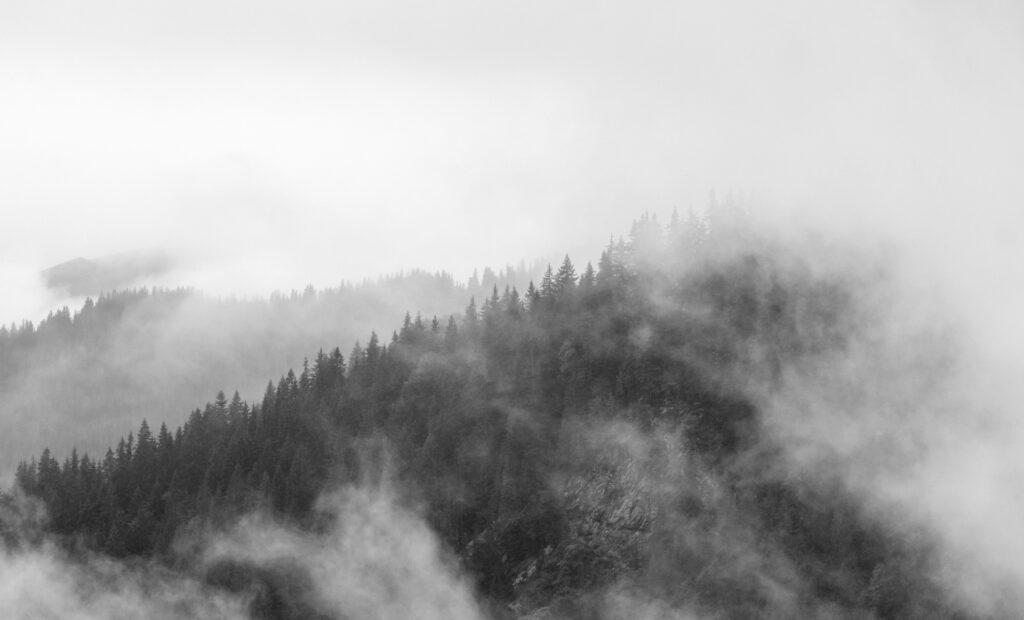
As I scrolled through those folders, I noticed three photographs I really liked — and many more that were weaker, but all shared one common theme.
Fog.
And then it hit me.
This could be a project.
A small project built around a single visual idea:
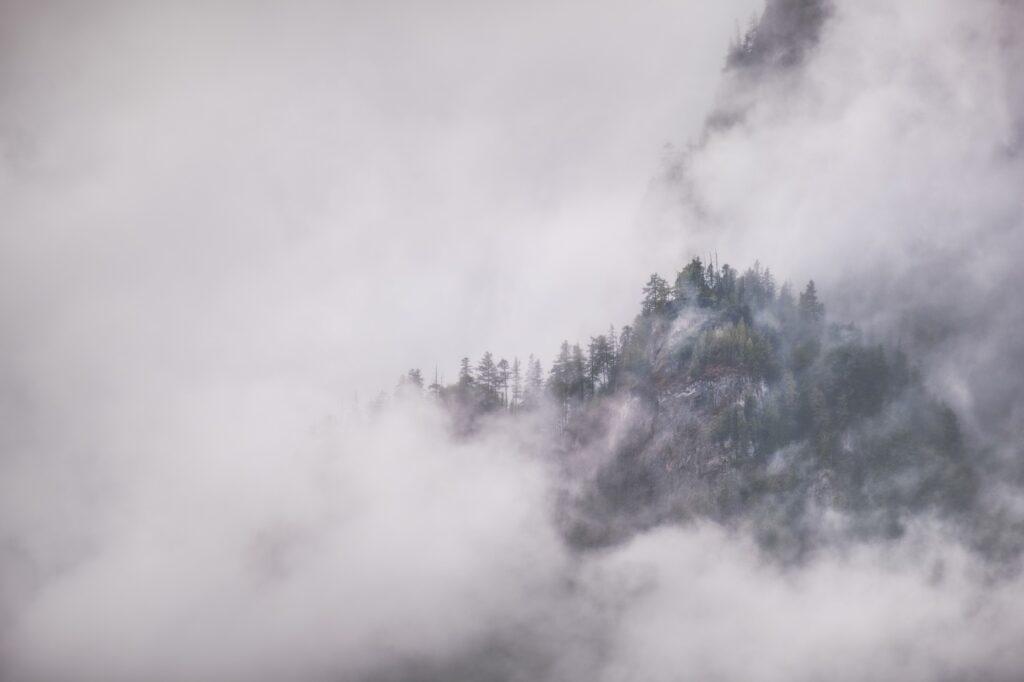
fog as the main subject.
I already had a few usable images, so I felt I had a starting point.
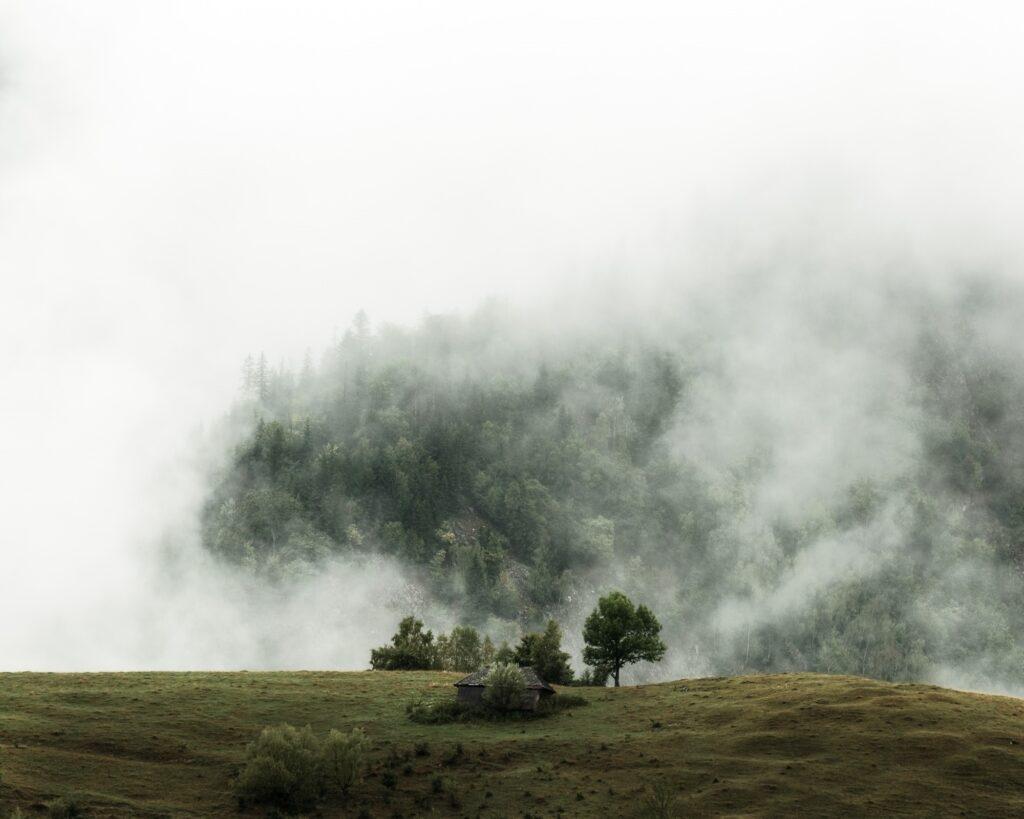
And even better, fog — especially in the Bucegi Mountains — is much easier to photograph than waiting for the perfect sunrise or sunset.
I could arrive at ten in the morning or three in the afternoon and still have a chance of finding something interesting.
That made the whole idea much more realistic.
And that is how Project Fog was born.
Why Fog Made Sense for Me
Once I had the idea, I started studying weather patterns.
I paid attention to:
• temperature differences
• cloud movement
• humidity
• places where fog tends to gather or roll through
Then I drove to specific locations and waited for the fog to appear or shift so I could get the shot I wanted.
Of course, I still drove a lot.
Maybe not as much as chasing sunrise in remote mountains, but still a lot.
My other goal for that year, since I couldn’t travel much abroad, was to drive some of the famous “Trans” roads in Romania.
For context, in Romania a mountain road that crosses a mountain range often receives the prefix Trans- followed by the name of that mountain.
So, for example:
• Transfăgărășan
• Transalpina
• Transbucegi
• Transsemenic
• Transrarău
• Transapuseni
That year I managed to drive on three of them:
• Transfăgărășan
• Transalpina
• Transbucegi
And some of the photographs in this project came from those roads or nearby areas.
The Reality Behind the Images
It may sound simple when written like this.
It was not.
To reach and drive the Transalpina, for example, I drove 635 kilometers in one day.
I left Bucharest at six in the morning, and the whole trip took around twelve to thirteen hours, including the stops for photography.
Because I was chasing fog, the system was simple.
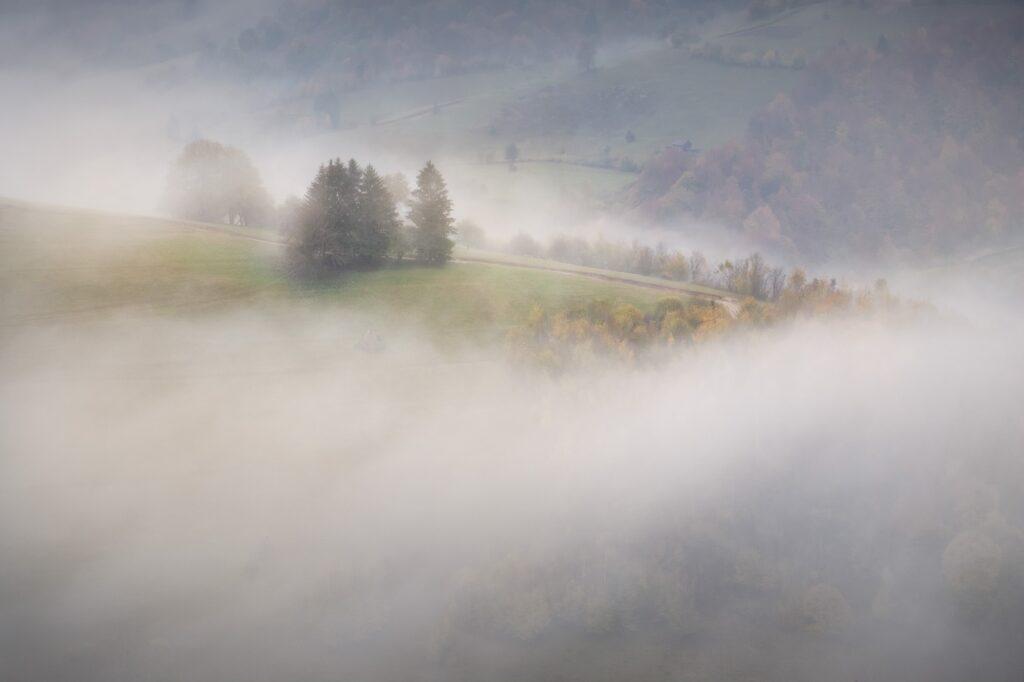
As I drove, my girlfriend helped scout the landscape, watched the peaks, checked the mist, and when something looked promising I pulled over, grabbed the camera and went to work.
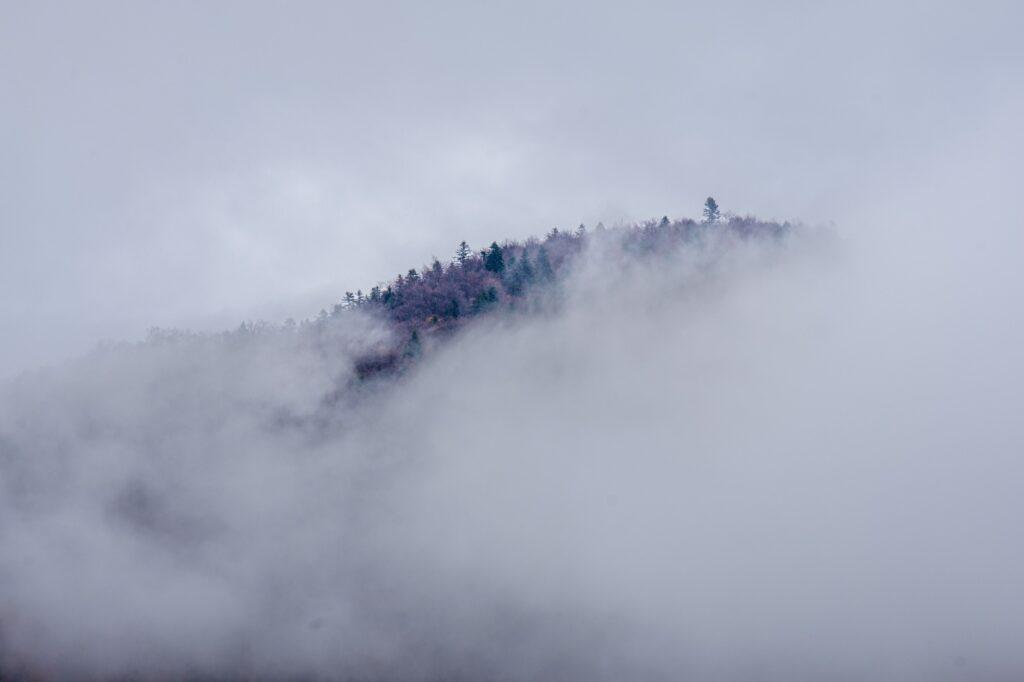
By the end of that day, I had around 60 fog photographs.
But only three of them really sparked my interest.
Only three felt strong enough to matter.
That is the reality of project work.
You may shoot a lot and keep very little.
A Small Success Along the Way
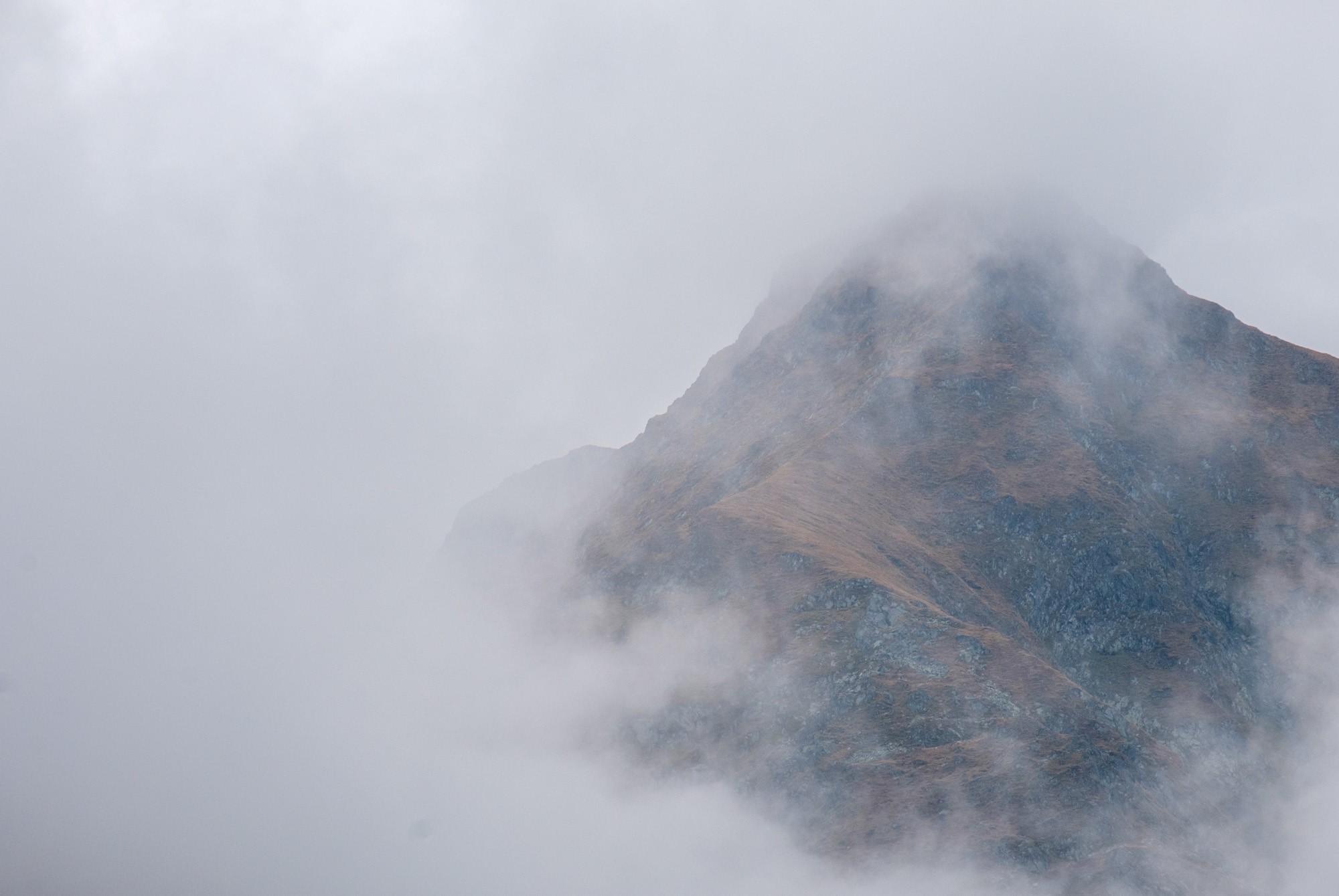
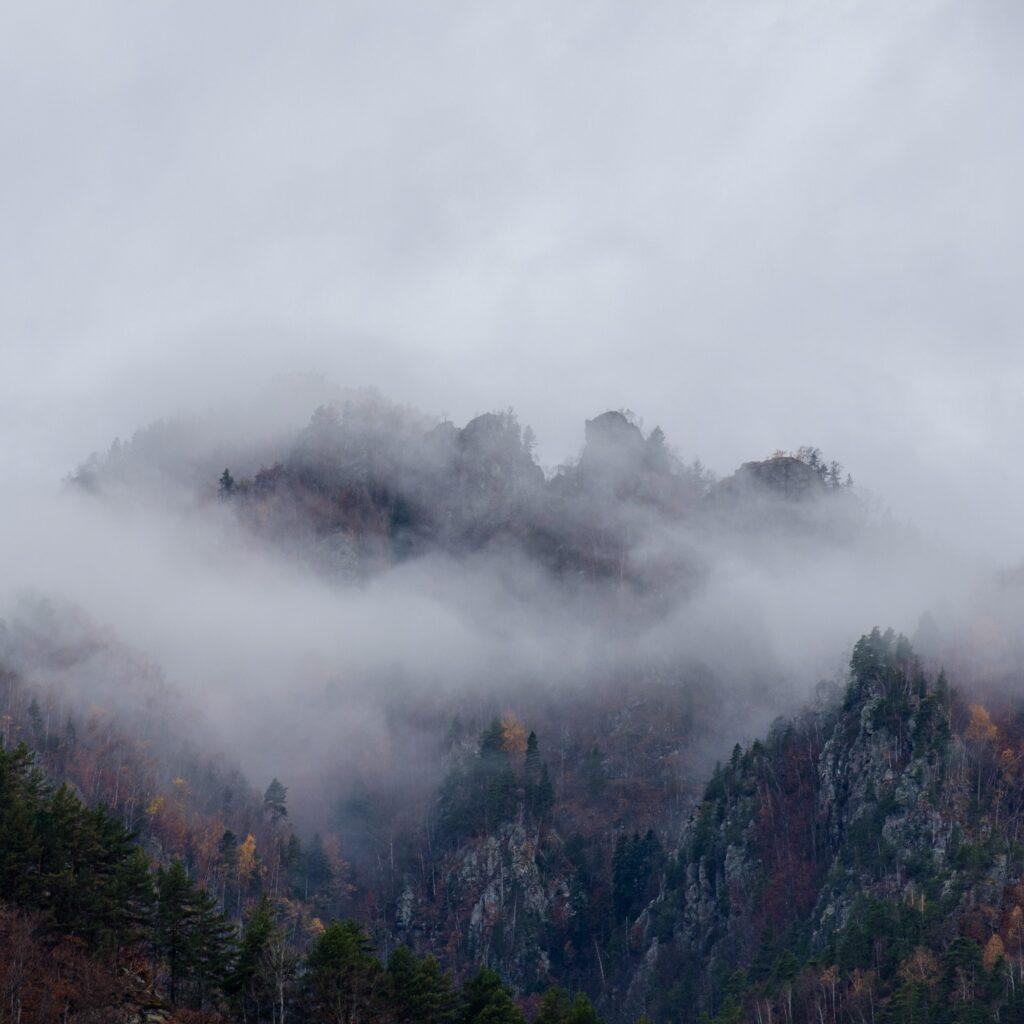
One of the photographs taken that day — Misty Peaks — was later entered into a photography contest: the 2nd International Exhibition of Photography “FADO 2021.”
The image received a Certificate of Accepted Work.
No, it didn’t win a major prize.
But I was still extremely proud to have it accepted and included in the official catalogue of the event.
Sometimes small recognitions matter a lot, especially when they confirm that an image you believed in also resonates with others.
The Camera and Lens Behind the Project
For the entire project, I relied mainly on:
• Fujifilm X-T20
• Fujifilm 55-200mm
I’ve already written a full article about the 55-200mm and how much I like that lens, but it’s worth repeating here that I used it heavily for this project.
Even though I know the lens is not as sharp after the 150mm mark, it still gave me what I needed in many situations.
Some of the images were even shot handheld.
Misty Peaks, for example, was one of them.
I saw the scene developing while driving, stopped the car, grabbed the camera and ran between a few rows of houses to photograph it.
If I had chosen to set up a tripod, the image might have been slightly sharper.
But I am 100% sure I would have missed the moment.
The fog was changing too quickly.
In that kind of situation, speed mattered more than technical perfection.
And the stabilization of the 55-200mm helped a lot.
I probably would have missed several images without it.
Why I Trusted the Fuji X-T20
Even though I own a Nikon D750 — still an excellent camera, no matter what anyone says — when I go out into nature, when I take long walks or workshops in the mountains, I still rely on my Fujifilm system.
Sports are another story.
But for nature and personal work, especially during that year, I almost always had my Fuji with me.
I spent so much time with the X-T20 that I feel completely natural using it.
And honestly, this small, relatively cheap camera exceeded all my expectations.
When I bought it, I didn’t even have enough money for an X-T2.
So I bought the X-T20 on sale and paid for it in four installments.
And yet, over time, this little camera has been used for:
• travel
• portraits
• food photography
• landscape
• sports
• wildlife
• street photography
It earned me money.
It got me paid jobs.
And not once did a paying client tell me:
“I wish the files looked different.”
What the X-T20 Helped Me Achieve
This camera helped me in more ways than I expected.
I used it to create work that helped me complete the New York Institute of Photography Professional Photography Course.
I used it to submit photographs for 1-to-1 sessions at the Royal Photographic Society.
In 2021 I became a member of:
• AIPS — International Sports Press Association
• ARPS — Romanian Sports Press Association
• AAFRO — Romanian National Photographers Association
And several of those applications included images taken with my Fuji X-T20.
Not bad for a small camera bought in installments.
A Brief Story About the X-T3
Would I want a better camera?
Of course.
At one point in 2021, I managed to trade my X-T1 and two prime lenses — the 23mm f/2 and 35mm f/2 — for a Fuji X-T3.
And I loved it.
I shot a lot of sports with it before moving more seriously to Nikon for that field.
But then something strange happened.
One day, out of nowhere, it stopped working.
Fortunately, it still had one month of warranty left.
The camera was sent to the UK, and after seven weeks it came back with a new motherboard.
The original one had failed completely.
To this day I still don’t understand how that happened.
And even though I regret selling it, I sold it the very same day it returned.
That’s life sometimes.
Gear comes and goes.
But through all of that, the little X-T20 stayed reliable.
It helped me again and again.
And that’s one of the reasons I love it so much.
Project Fog Was Only the Beginning
Project Fog helped me finish something real during a difficult year.
But more than that, it helped me start thinking in terms of long-term personal projects.
It helped me realize that I don’t always need spectacular locations, impossible logistics or perfect conditions.
Sometimes all I need is:
• one idea
• one recurring theme
• patience
• repetition
• a camera I trust
Project Fog was only the beginning.
I already mapped out new ideas, wrote them down and started studying the logistics needed to make them happen.
And you can be sure of one thing: my little camera will be there with me when those projects come to life.
Final Thoughts
Some years are not about huge trips or dramatic achievements.
Some years are about adapting.
About finding another path when the original plan no longer feels possible.
Project Fog came from frustration, exhaustion and the need to reconnect with nature in a more sustainable way.
And it ended up giving me something much more valuable than just a few photographs.
It gave me direction.
It reminded me that good projects don’t always begin with big ambitions.
Sometimes they begin with one simple visual idea — and the willingness to follow it.
And for that, I have a lot to thank my Fuji X-T20 for.
Fără comentarii