

30 mart. Railway Line 801 — A Documentary Photography Project Between Bucharest and Oltenița
October, 2025
Before leaving for New York, I started thinking about a new photography project.
A project that would come as a continuation — a natural extension of Fragments, the two photo volumes I created in Bucharest.
I wrote down ideas, notes and sketches, but many of them felt like future chapters rather than something I could start immediately. They needed a clearer anchor.
So I opened Fragments again and started looking through it.
Not at the sequence, not at the colour, not at the text — but at the connections I could build upon, the threads that could extend the story further.
And slowly, the direction became clearer.
A large part of Fragments had been photographed around Gara de Nord, Bucharest’s main train station — a place of constant movement, a transit space where journeys begin and end.
A place through which hundreds of thousands of people pass every year.
A place where millions of stories have been written.
Discovering Railway Line 801
But Bucharest does not have just one train station.
It has many.
Some large, some small. Some serving long-distance routes, others barely stretching one hundred kilometres outside the city.
So I began researching them.
I searched online, mapped their routes and locations, and slowly the direction of the project started to take shape.
The obvious choice would have been to document a large and important railway line.
But that felt predictable.
So I chose something else.

A small railway line.
One that runs from Bucharest to a small town in the south — a port city on the border with Bulgaria.
Oltenița.
And that is how Railway Line 801 began.
A Forgotten Route Near Bucharest
Railway Line 801 connects Titan Sud Station in Bucharest with Oltenița, covering roughly 60 kilometres across the flat plains of southern Romania.
The route passes through a series of small stations and almost forgotten halts:
• Tanganu
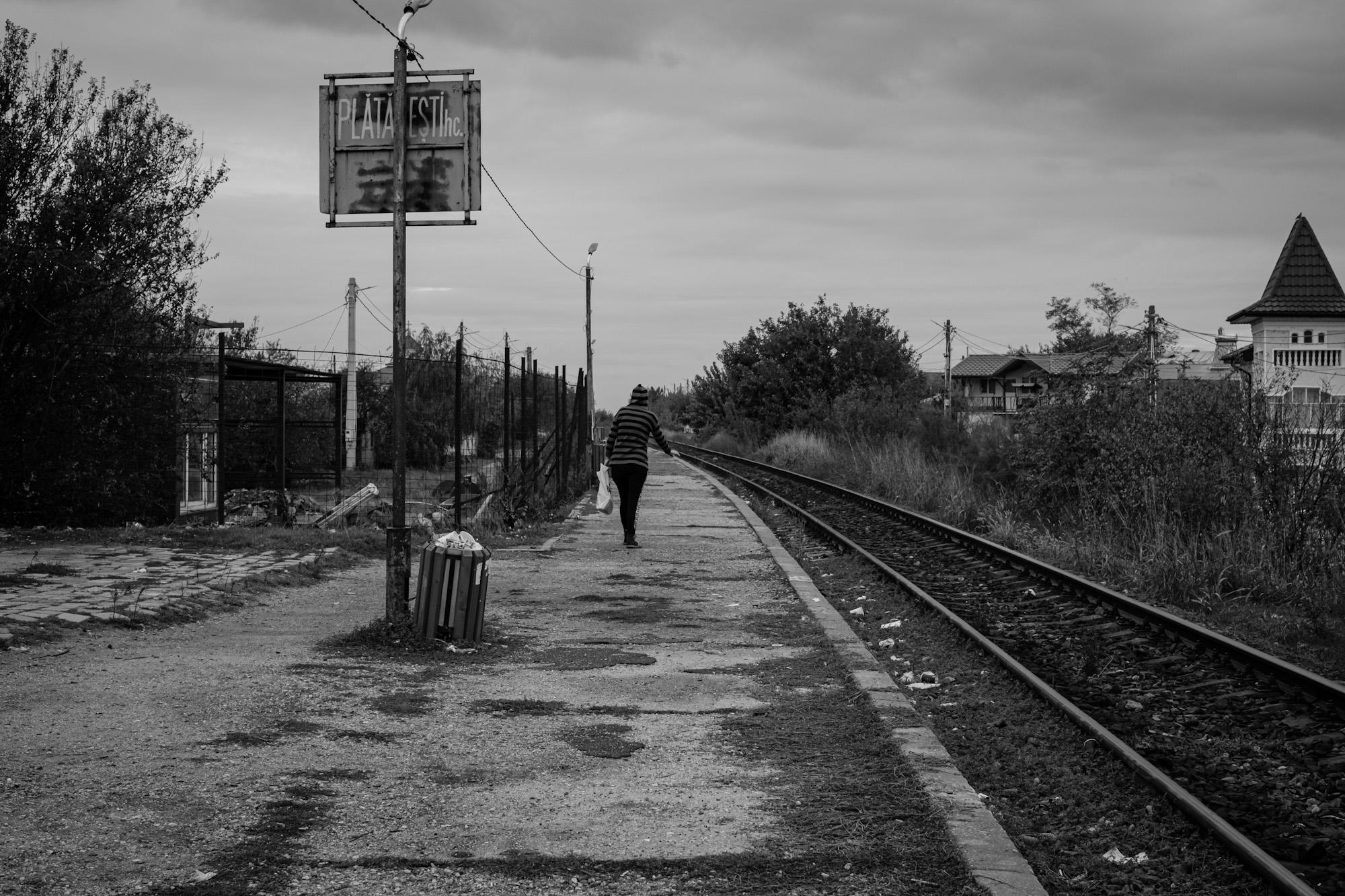
• Plătărești
• Vasilați
• Cucueții Sudiți
Villages that lie only a few kilometres from Bucharest — yet feel as if they exist in a completely different time.
The project initially started with a simple idea. To document the railway itself. The infrastructure.
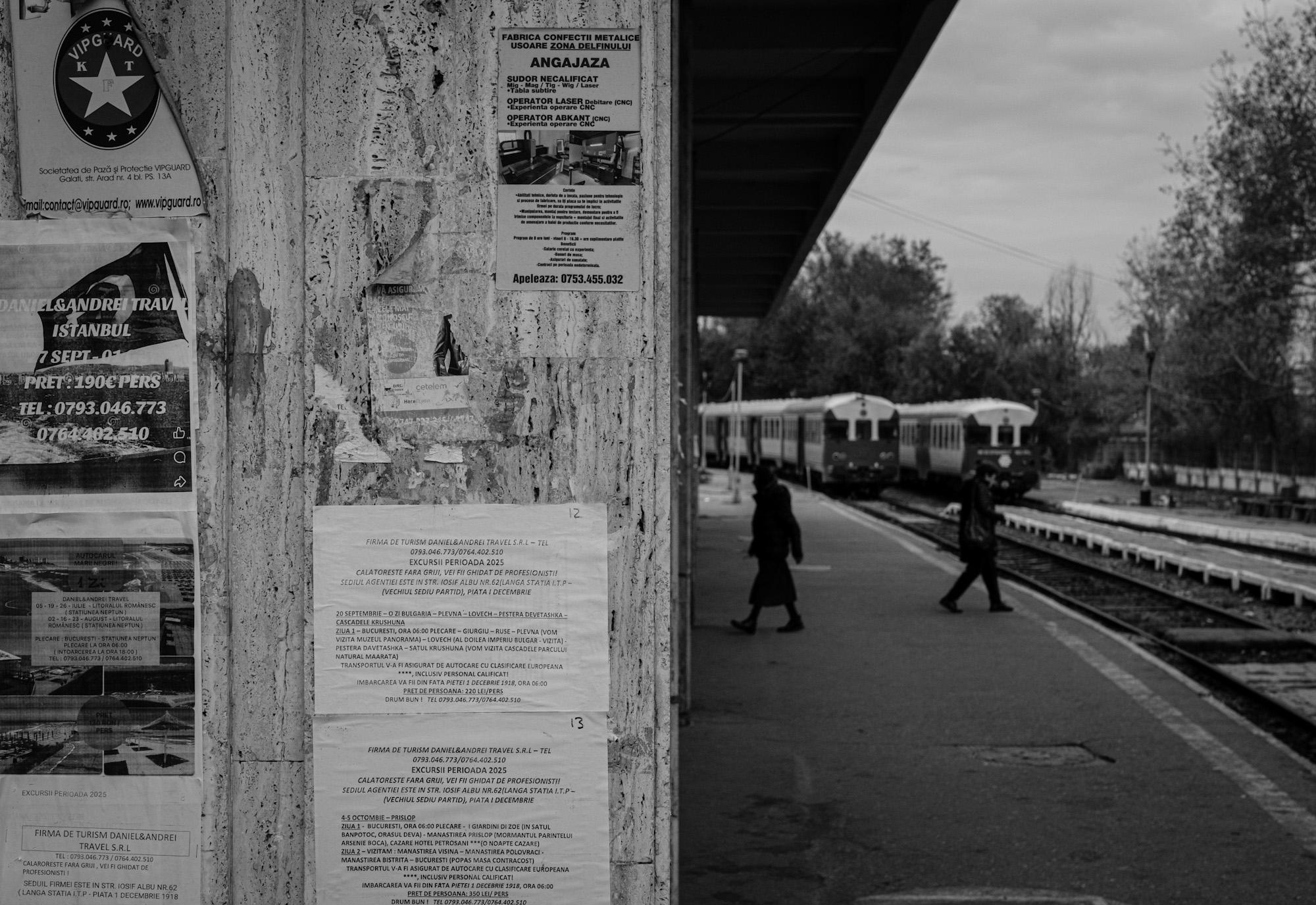
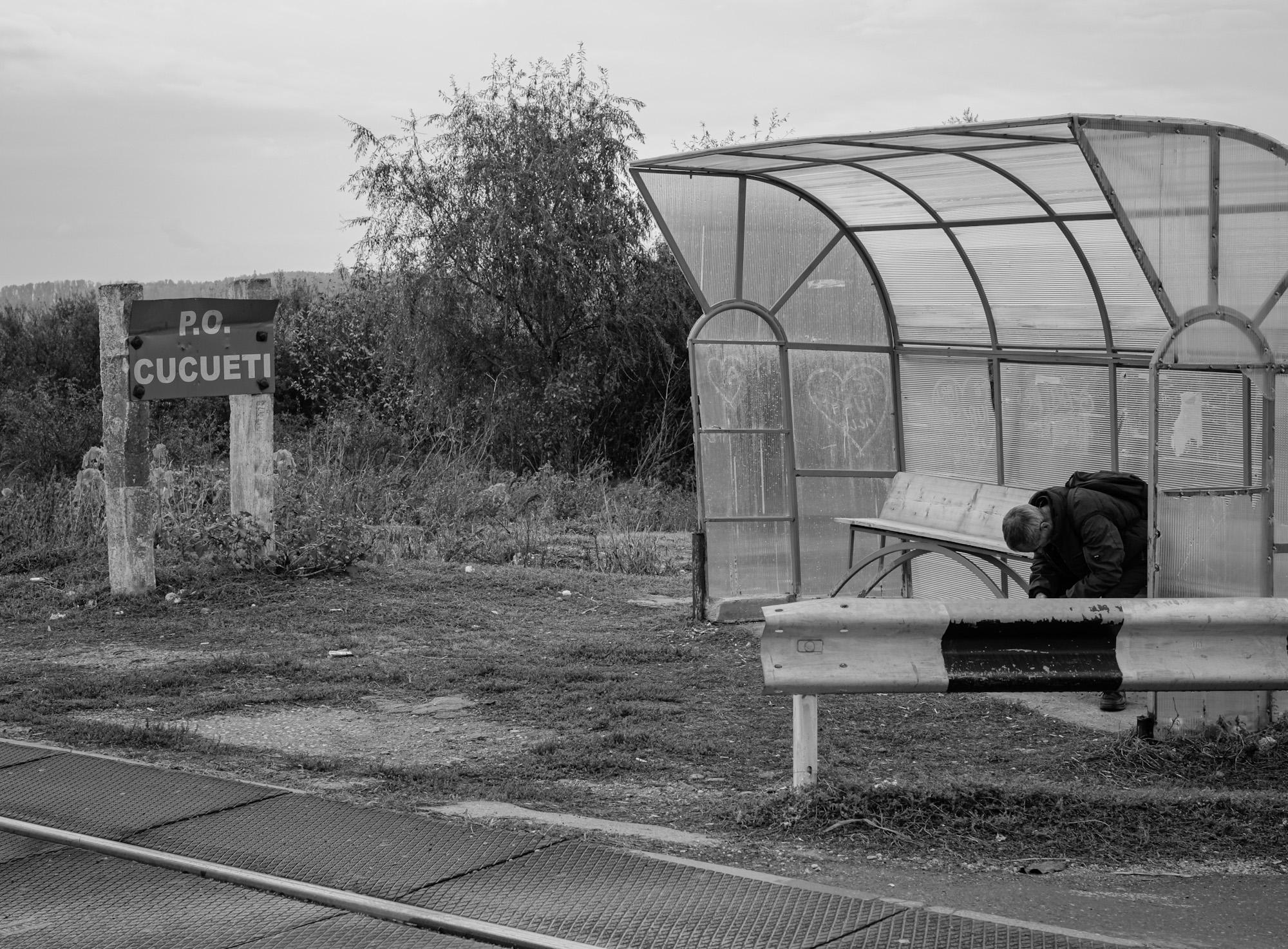
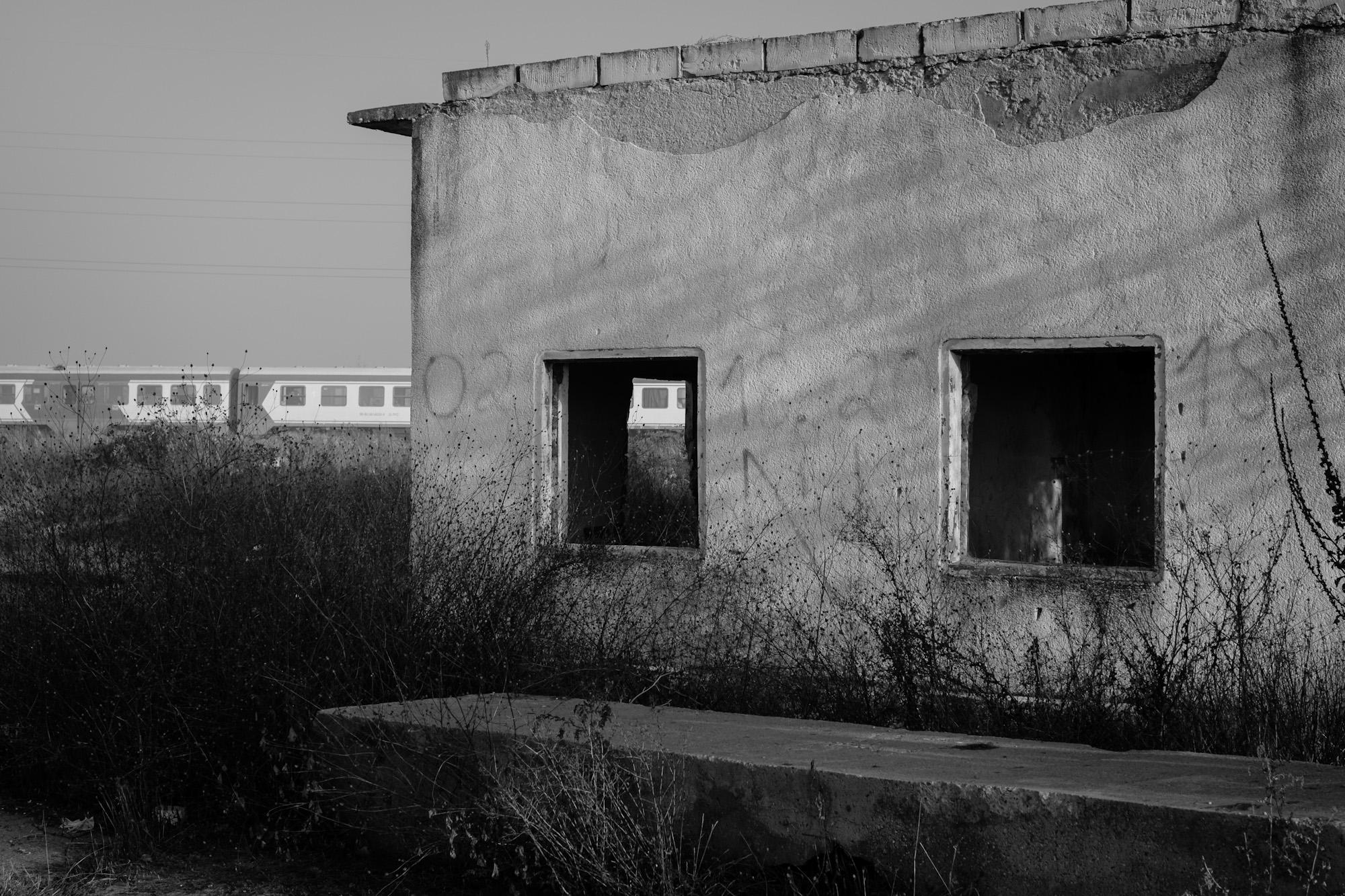
The small stations reduced to decaying rooms — often with no benches and no protection from rain.
A strong visual contrast between the relatively modern train and the abandoned, vandalised stations that still serve this route.
Eighteen stations and halts form the line between Bucharest and Oltenița.
Eighteen small points in a landscape that often feels forgotten.
From Infrastructure to Human Stories
Because the line lies so close to Bucharest, I could return again and again.
And slowly, the project started to change.
It moved beyond documenting the railway infrastructure.
It began to focus on the villages, the people, and the everyday life shaped by this railway line.
Every morning, many people travel to Bucharest to work long hours in the city.
And every evening they return home — tired, waiting again for the next train the following day.
Line 801 quietly connects these villages to the capital.
Without it, many of these daily journeys would simply not exist.
A Minimal Photography Setup
This entire project was photographed exclusively with a Fujifilm X-S10 and the 35mm f/1.4 lens.
From the beginning I decided to keep the equipment minimal and consistent.
I accepted the risk of missing certain frames — of not having the “perfect” focal length, of losing images that a zoom lens might have allowed me to capture.
But Line 801 needed intimacy, not versatility.
In places where people look at you with surprise simply for taking photographs in the middle of nowhere, a small camera makes a difference.
It allows you to move quietly. To blend in.
The 35mm focal length forced me to stay present — to step closer, to wait longer.
Limiting the equipment became part of the concept.
A unified visual language for a railway line that already feels fragile and coherent in its own rhythm.
Why I Chose Black and White
Another important decision was how the project should look visually.
At first I hesitated between:
• a muted colour palette, similar to Eterna
• or a classic black and white approach inspired by Kodak Tri-X 400
In the end, I chose to see everything in black and white.
I used a Tri-X inspired simulation while shooting, allowing me to visualize almost 95% of the final image directly in camera.
Later, I edited the RAW files in Lightroom with minimal intervention.
Only small adjustments:
• exposure corrections
• subtle sharpening
• occasional cropping
I follow a simple personal rule. Any photograph submitted to the press or to competitions should remain very close to what was captured in camera.
The story must exist in the frame — not in post-production.
Returning Again and Again
Over the years I have taken many photographs.
Some were awarded.
Some were published in magazines and newspapers.
But Line 801 feels different.
It is close to me in a way that only a photographer working on a long-term project can truly understand.
It is not about luck.
Not about a single decisive moment.
Not about inspiration that appears and disappears.
It is about perseverance.
Returning to the same places again and again.
Driving from one station to another.
Waiting in open fields for the train to appear in the distance.
Standing next to the people who use this railway line every day.
Talking to them.
Listening.
Often it meant sitting alone in a car, moving from location to location across the plains, passing horse-drawn carts with a small camera resting beside me.
A Landscape Between Rivers and Rails
Along this railway line flows the Dâmbovița River, which meets the Argeș River in Budești.
The Argeș continues southward until it reaches Oltenița, where it finally flows into the Danube.
Between the rivers and the railway line exists a small, silent world.
A landscape where everyday life moves quietly.
Contrasts Along Line 801
Line 801 is not just a train route.
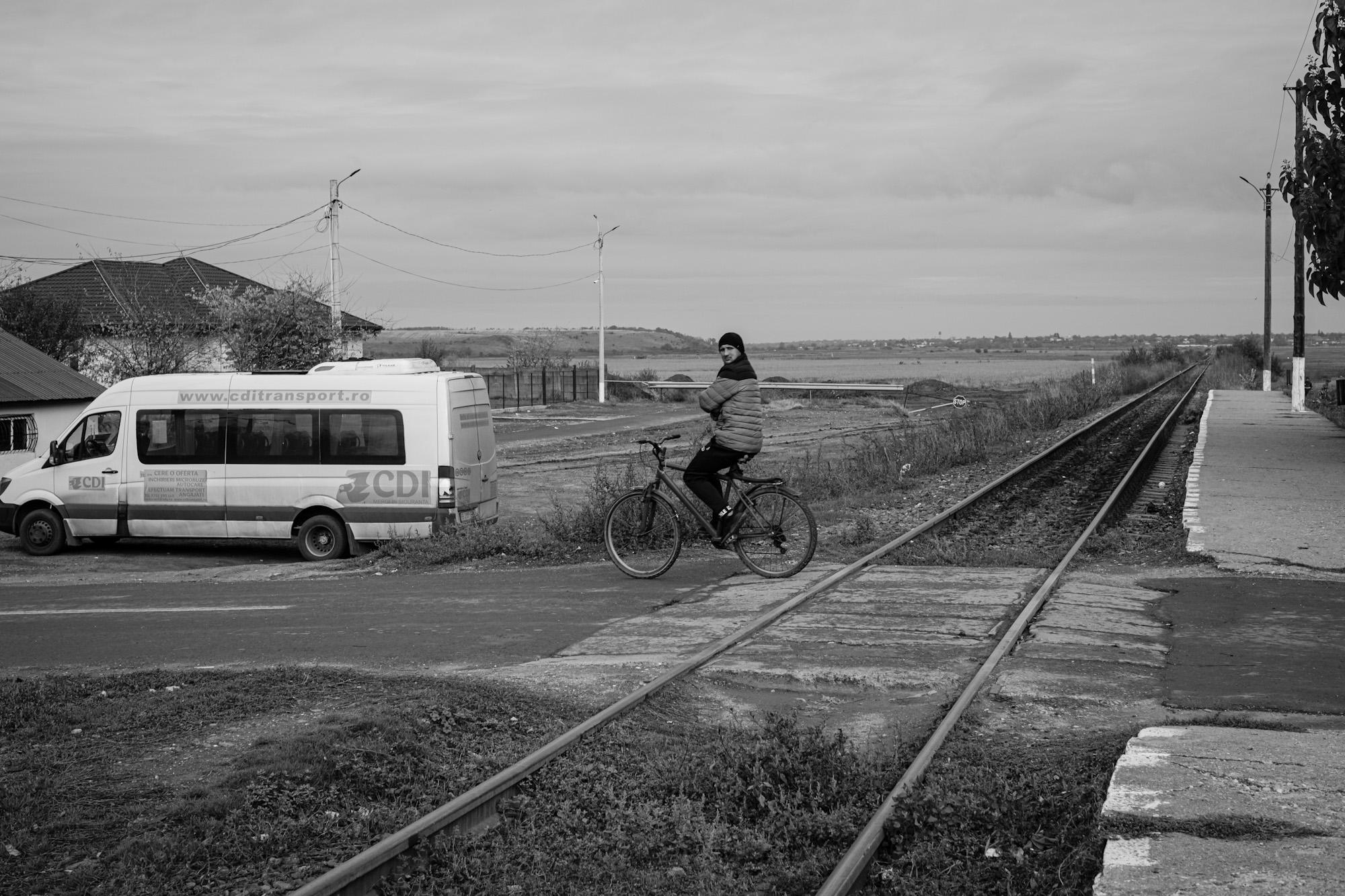
It is a crossing between different worlds:
• forgotten villages and a capital city bursting with life
• ruined houses and expensive penthouses
• horse-drawn carts and cars with hundreds of horsepower
• endless plains and apartment blocks built without green spaces
The contrasts are constant.
And they shape the rhythm of the project.
A Direction for the Future
What began with Fragments found a deeper meaning here.
Line 801 pushed the idea further.
It demanded more time, more patience and more commitment.
Through this project I realised more clearly what attracts me as a photographer.
Not spectacle.
Not the extraordinary.
But the quiet structures that shape everyday life.
I realised that what interests me most is building bodies of work, not collecting isolated images.
And somewhere along this railway line — moving back and forth between Bucharest and Oltenița — the direction I want to follow became clearer.
More Than a Railway Line
In the end, Line 801 has never really been only about rails.
It is about:
• transitions
• contrasts
• neglect
• indifference
But also about something else.
Hope.
A lot of hope.
Hugo Pinho
Postat la 15:10h, 31 martieThat is a very interesting choice of theme for a photographic project. It feels less about the railway line itself and more about everything that unfolds around it.
A quick question. Over the past two decades, many railway lines here in Portugal have been deactivated, which has been a significant loss. Some have been left abandoned, while others have been converted into eco trails for pedestrians and cyclists. Has something similar happened there, or are the lines still active and widely used?
Panaitescu Stefan
Postat la 15:12h, 06 aprilieHi Hugo and thank you for the message!
It started with just the railway then yes it became more. People, habits, the abandoned structures, the trash that is suffocating the outskirts of the villages and so on.
This particular line is still used by commuters who go to Bucharest for working then returning to Oltenita or the villages along the way.
I have a project for a totally abandoned railway but I haven’t started that one yet!
Diana
Postat la 13:27h, 06 aprilieWow… It s a bold documentary… Keep doing it👏👌
Panaitescu Stefan
Postat la 15:09h, 06 aprilieThank you so much Diana! More will come!!!