

10 mart. Intimate Winter Details in the Ciucaș Mountains with the Fujifilm 55-200
In 2025 I had the chance to participate in a photography workshop in the Ciucaș Mountains in Romania. I photographed the area before during summer and autumn, but never during winter.
Before leaving home I spent some time looking carefully at the weather forecast and thinking about what I wanted to photograph. Since I already knew the area quite well, I had a clear idea of the locations I wanted to visit.
In my mind there were two possible scenarios.
The first one was the ideal winter landscape: heavy snow covering everything, simplifying the mountain into clean shapes and minimal compositions.
The second scenario was the exact opposite: little snow, or snow only at lower elevations.
Having these two ideas in mind before arriving turned out to be extremely useful. I knew I would only be able to participate in two shooting sessions during a single day of the workshop, not the full three days, so I wanted to make the most of the time available.
At the end of that day I returned home with a small series of photographs that I am personally very happy with.
When the Mountain Doesn’t Look Dramatic
When we arrived in the mountains the situation was slightly unusual.
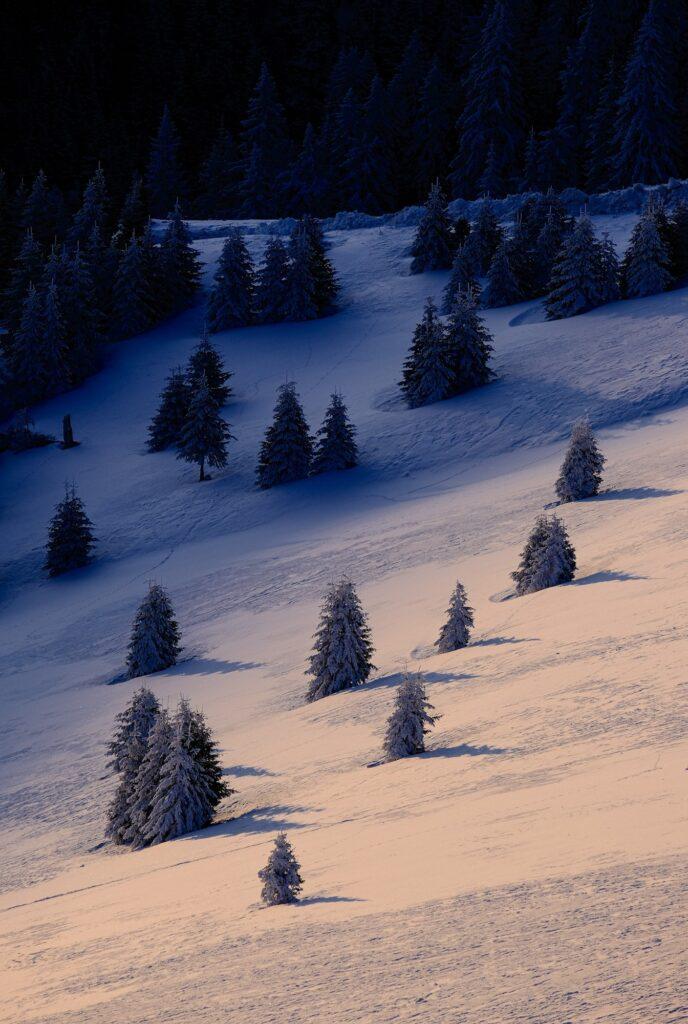
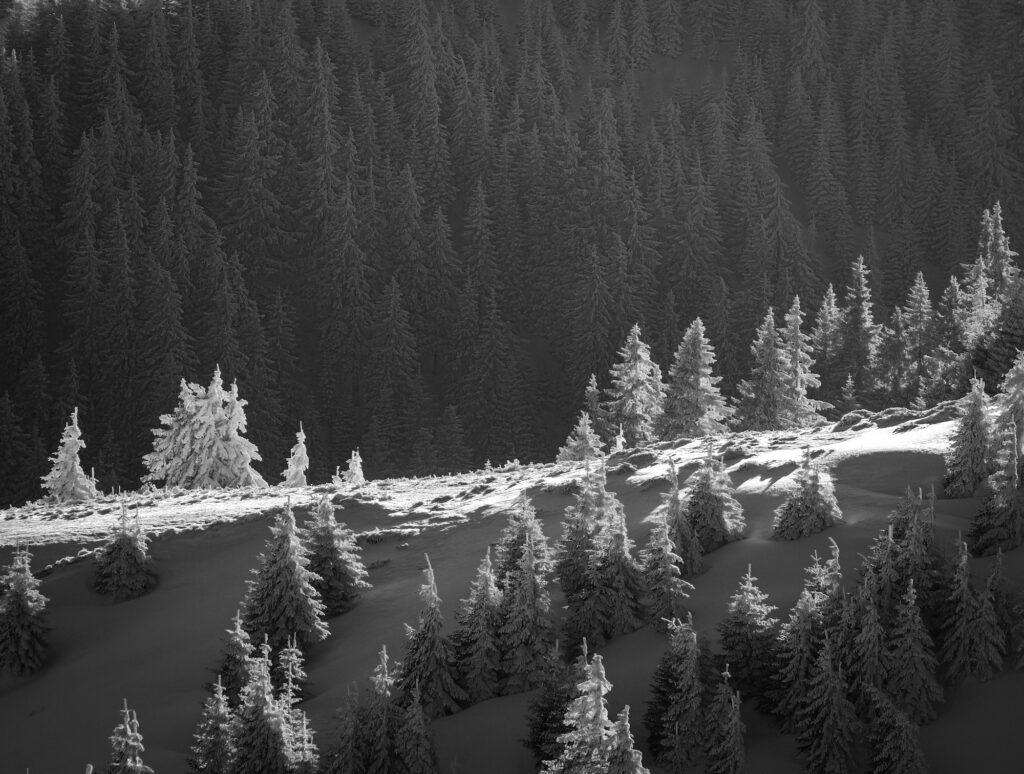
Up to about a quarter or halfway up the slopes there was a solid layer of snow. Higher up, however, the snow was almost completely missing.
This changed the way the mountain could be photographed.
Normally, when photographing mountain landscapes, the instinct is to reach for a wide-angle lens and try to capture the entire scene. But without snow covering the peaks and with a completely clear sky, wide scenes felt rather flat and uninspiring.
The absence of clouds made things even more difficult. The light was clean and calm, but it lacked the drama that often helps build strong wide compositions.
Fortunately, I had already prepared for this possibility before leaving home.
Searching for Small Scenes
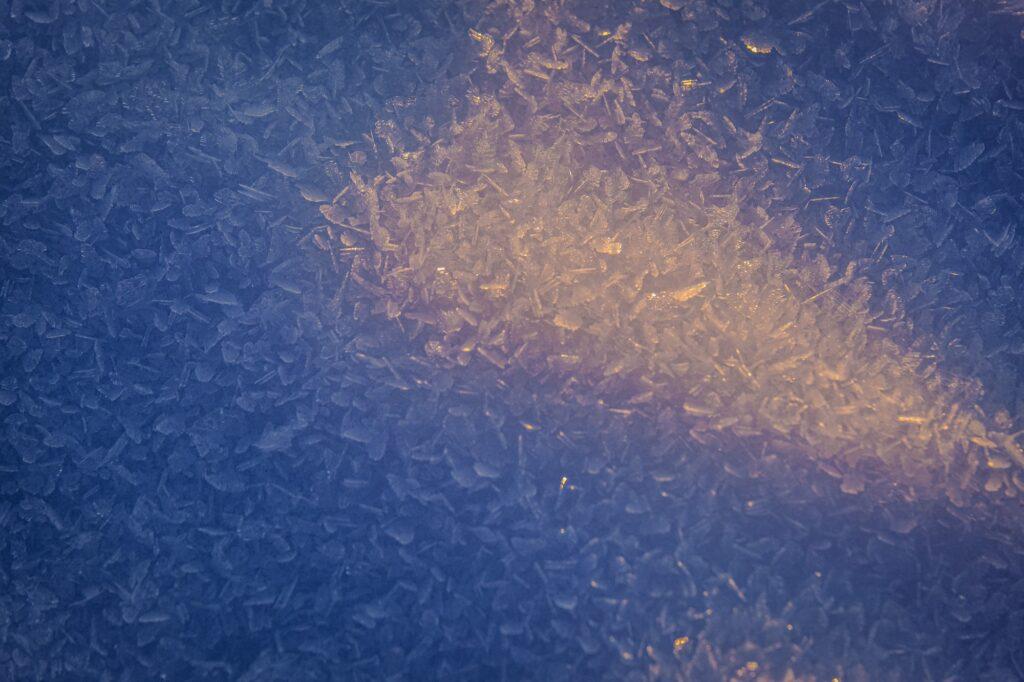
Because the upper slopes lacked snow, I decided to follow the second plan I had prepared: searching for small and intimate winter details.
Instead of trying to force dramatic landscapes, I started looking for subtle scenes that revealed the quiet beauty of winter.
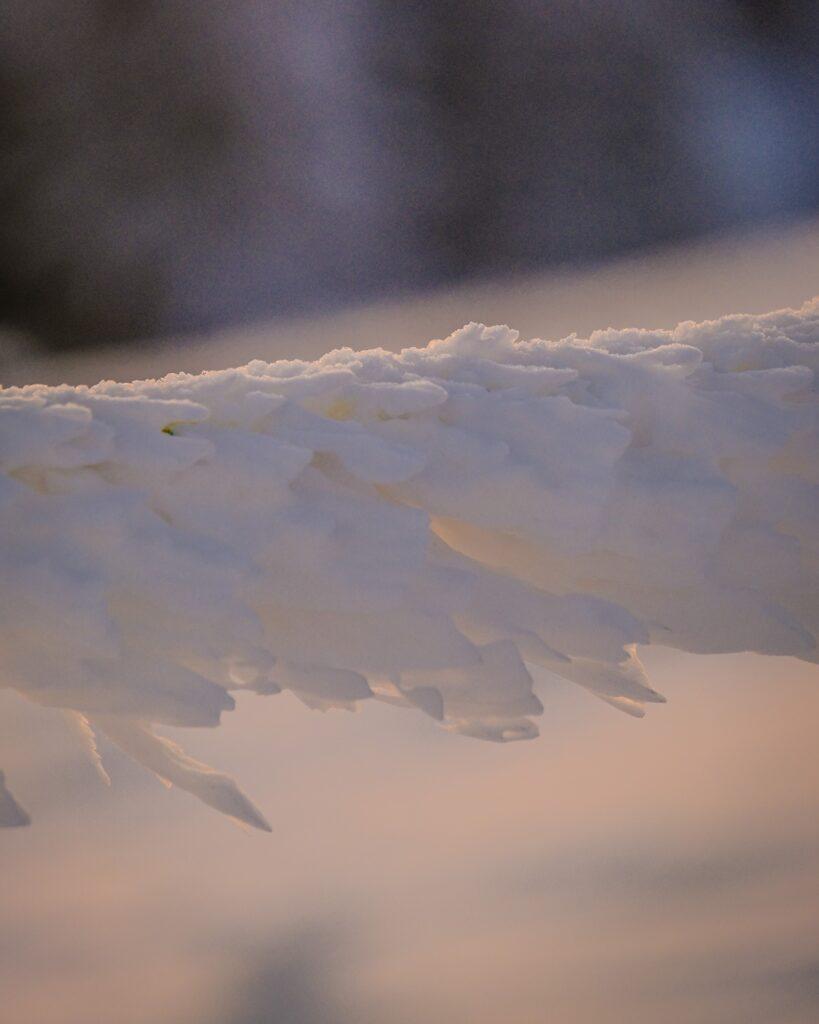
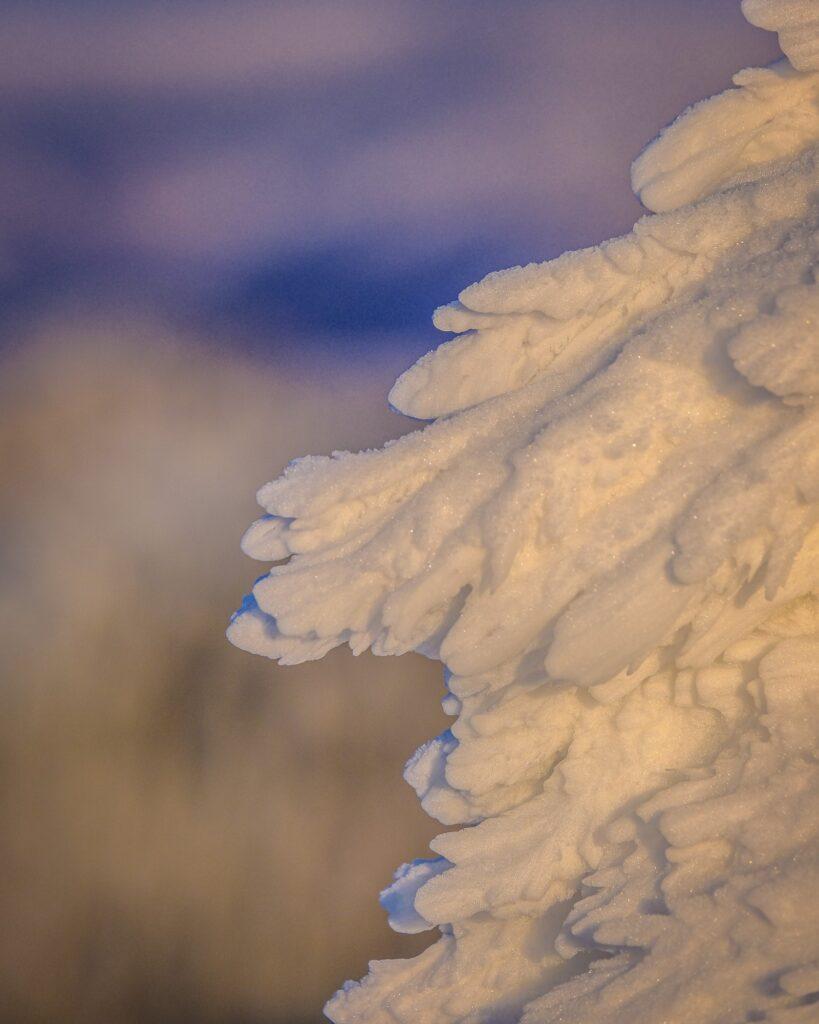
Edges of snow shaped by the wind.
Tiny ice crystals formed overnight.
Small areas where the morning light fell perfectly on frozen textures.
These were not grand landscapes.
They were small fragments of winter.
Sometimes nature does not need to be monumental to be interesting. It simply requires a bit more attention.
Looking Down While Everyone Looked Up
My approach during that morning was very simple.
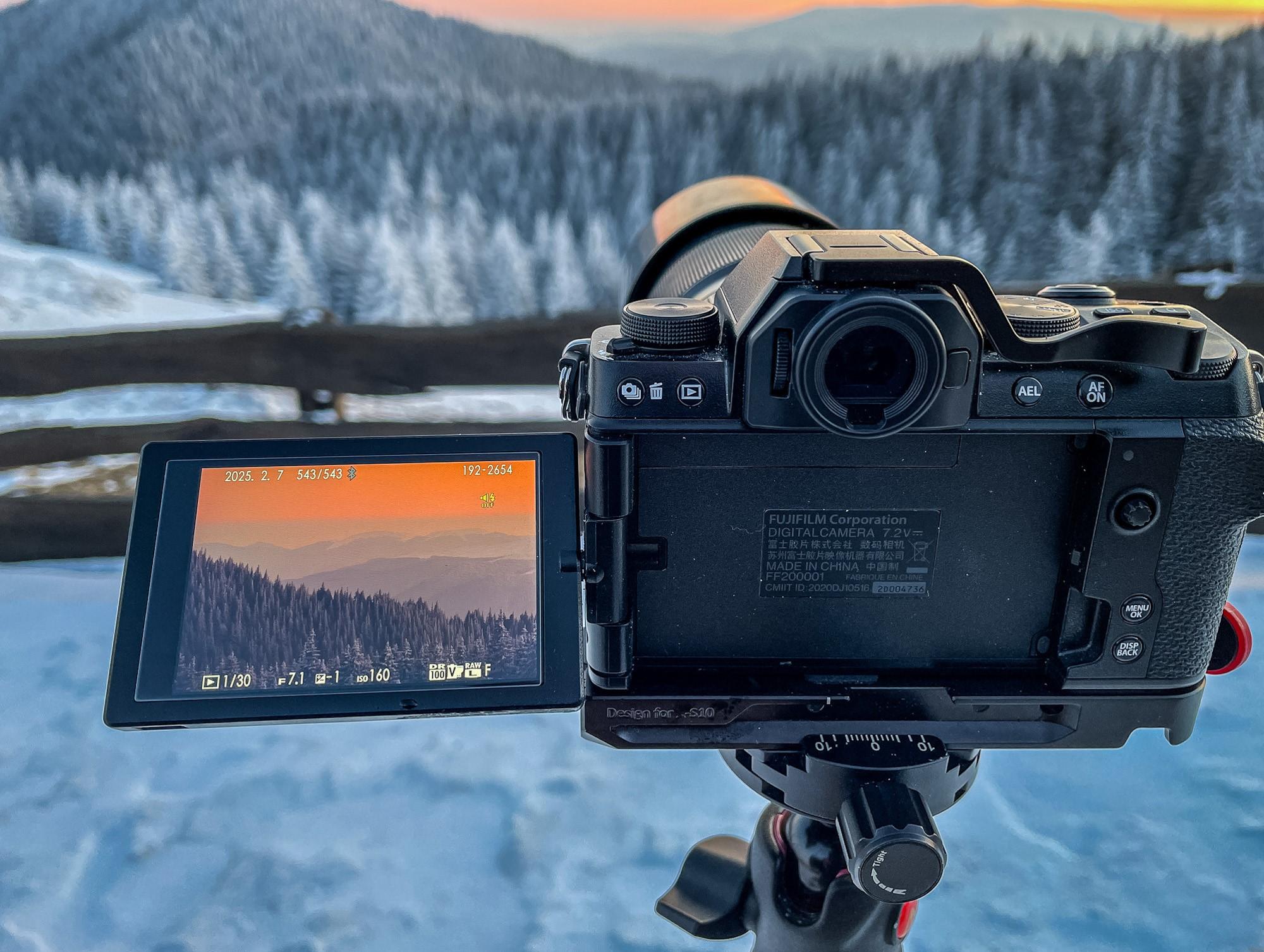
I used the Fujifilm 55-200mm lens, most of the time at the long end around 200mm (roughly 300mm full frame equivalent).
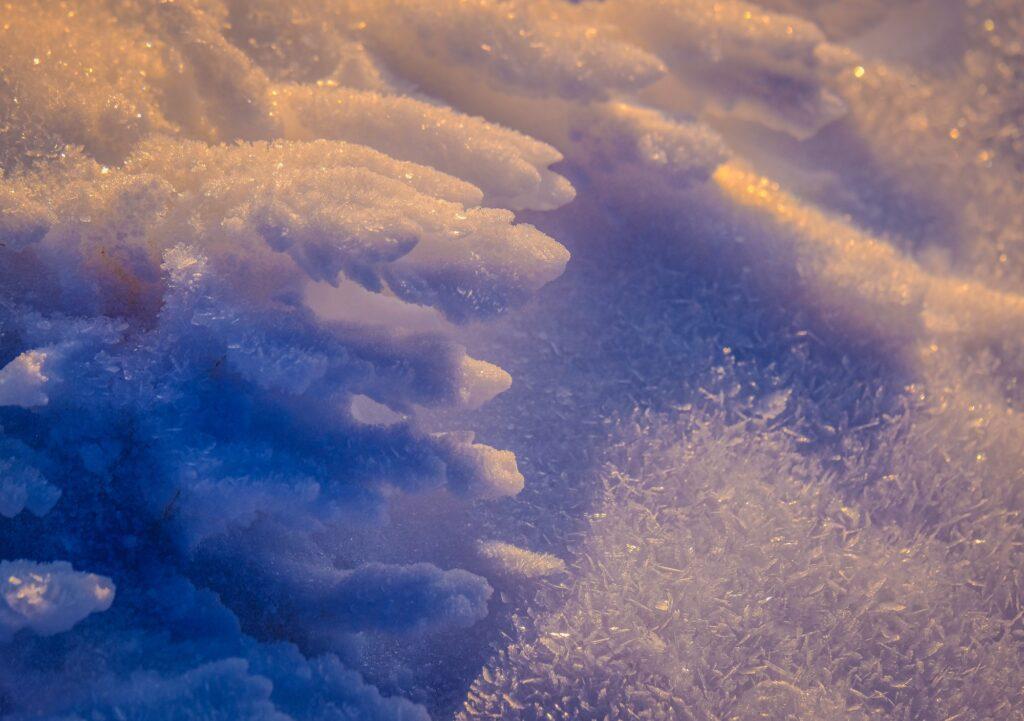
While many photographers were looking toward the horizon waiting for clouds or trying to capture dramatic landscapes, my camera was usually pointed downward.
Toward the ground.
Toward the textures of the snow.
Toward the delicate ice crystals forming on the surface.
Sometimes I photographed a frozen rope, sometimes animal tracks in the snow, and other times a simple scene where a strip of light separated two parts of the landscape.
A telephoto lens simplifies the scene. It removes distractions and allows you to isolate exactly the element that matters.
That morning I ended up photographing small fragments of winter that together tell a quiet story about the mountain.
One Lens, One Vision
Even the photographs that appear slightly wider were made using the same lens.
The Fuji 55-200.
Temperatures were around -15 to -20°C, yet the camera performed flawlessly. The only real challenge was battery life, which naturally drains faster in very cold conditions.
Otherwise, I never felt the need to change lenses.
I knew from the start that my vision for the day required exactly that focal length.
Since this was my third time photographing the area, I also knew what other images I could potentially capture: bare peaks with snow at the base, birds flying across the valley, or more traditional mountain scenes.
But this time I chose to ignore those possibilities and stay committed to the project I had in mind.
Small fragments of winter.
A Small Bonus: Almost Everything Was JPEG
There was also a small experiment behind this series.
Since I was photographing small details without extreme contrast or difficult lighting conditions, I knew that a huge dynamic range would not be necessary.
Out of the entire set of photographs I captured that morning, only two or three were edited starting from the RAW files. The remaining 30–40 images were edited directly from the JPEG files.
Only minor adjustments were needed.
A bit of contrast, slight exposure tweaks, small corrections.
My goal was to simplify my workflow and see how quickly I could finish a complete series.
About an hour after returning home the photographs were already edited and ready to be published as a small gallery.
It is a series I personally enjoy a lot, perhaps because it came from a very simple idea: paying attention to the quiet details of winter.
Fără comentarii